Engineers use grade 5 titanium (Ti-6Al-4V) as an alpha-beta titanium alloy across aerospace, medical, and industrial applications. Compared to commercially pure titanium grades, it delivers higher mechanical strength while still maintaining reliable corrosion resistance.
The sections below explain how manufacturers produce grade 5 titanium sheet, covering each stage from melting and hot working to heat treatment and rolling.
Chemical Composition of Grade 5 Titanium
Grade 5 titanium contains controlled additions of aluminum and vanadium, which create a stable alpha-beta alloy structure. Aluminum increases strength and thermal stability, while vanadium improves toughness and workability.
As a result, this balanced alloy chemistry enables grade 5 titanium sheet to outperform commercially pure titanium grades in structural and load-bearing applications.
Mechanical Characteristics
Grade 5 titanium provides a well-balanced combination of mechanical properties, including:
- High tensile and yield strength
- Strong fatigue resistance
- Moderate ductility compared to pure titanium
- Stable performance at elevated temperatures
However, manufacturers must carefully control processing conditions, as these properties depend directly on correct manufacturing and heat treatment practices.
Raw Material and Alloy Preparation
Manufacturers begin by extracting titanium from mineral ores and converting it into sponge form. They then blend the sponge with carefully controlled amounts of aluminum and vanadium to achieve the required alloy composition.
At this stage, producers tightly control oxygen and other interstitial elements because these elements directly influence strength, ductility, and toughness.
Melting and Ingot Casting
Next, manufacturers melt the alloy mixture in controlled atmospheres to prevent contamination. Because titanium reacts easily with oxygen, nitrogen, and hydrogen at high temperatures, strict control during melting remains essential.
After melting, producers cast the alloy into solid ingots. These ingots form the starting material for subsequent processing into bars, slabs, and flat products.
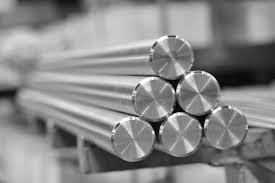
Production of Grade 5 Titanium Bars
Manufacturers then hot-work the ingots through forging or rolling operations. During this phase, processing:
- Breaks down the cast structure
- Improves internal soundness
- Refines the grain structure
- Reduces ingots into usable bar or slab dimensions
The resulting grade 5 titanium bars either move directly into machining applications or serve as feedstock for plate and sheet production.
Heat Treatment of Titanium Bars
After hot working, bars undergo controlled heat treatment. This stabilizes the microstructure and relieves internal stress introduced during deformation.
Proper heat treatment ensures the material remains workable and suitable for further rolling operations.
Conversion into Slabs for Sheet Rolling
For sheet manufacturing, producers process selected bars into wide slabs. Before rolling, they condition the slab surfaces to remove oxidation, scale, or surface contamination.
This preparation promotes uniform deformation and helps maintain consistent surface quality throughout the rolling process.
Rolling Process for Grade 5 Titanium Sheet
Manufacturers roll the prepared slabs in multiple stages to achieve the required thickness and properties. The process typically includes:
- Hot rolling for major thickness reduction
- Intermediate heat treatments when necessary
- Cold rolling to improve dimensional accuracy and surface finish
Together, these steps transform slabs into grade 5 titanium sheets with uniform thickness, controlled microstructure, and consistent mechanical properties.
Finishing and Quality Control
After rolling, producers complete finishing operations such as cleaning, straightening, and cutting. They then conduct final inspections to verify:
- Dimensional accuracy
- Surface condition
- Compliance with mechanical and material specifications
Only material that meets defined standards proceeds to further processing or shipment.
Typical Applications of Grade 5 Titanium Sheet
Because of its strength-to-weight ratio and corrosion resistance, industries commonly use grade 5 titanium sheet in:
- Aerospace structural components
- Medical and surgical devices
- Marine and offshore equipment
- Chemical processing systems
- High-strength industrial assemblies
Engineers often select this material where weight reduction, durability, and long-term reliability remain critical.
Summary
Manufacturers produce grade 5 titanium sheet through a tightly controlled sequence of steps, including alloy preparation, melting, ingot casting, bar production, rolling, and finishing. Each stage directly affects the final mechanical performance and corrosion resistance of the material.
By understanding this process, engineers and buyers can make informed material selections for demanding engineering applications.