Titanium is a lightweight, high-strength metal valued for its outstanding corrosion resistance and durability, making it a top choice across aerospace, medical, marine, automotive, and chemical industries. In this blog, we’ll explore titanium’s essential chemical, mechanical, and physical properties—from its ability to resist oxidation and corrosion to its high tensile strength, fatigue resistance, and low density. You’ll learn about its many applications, including aircraft structures, medical implants, marine components, and chemical processing systems. We’ll also cover various titanium products such as plates, sheets, tubes, rods, bars, fasteners, wire, foil, coatings, alloys, and castings each offering unique performance advantages. Plus, we’ll outline common titanium grades like Grade 1, Grade 2, Ti-6Al-4V (Grade 5), and Ti-3Al-2.5V (Grade 9), helping you select the right material for your needs. Whether for structural strength or corrosion resistance, titanium delivers unmatched value in high-performance environments.
What is Titanium?
Titanium (Ti) is a transition metal known for its high strength, light weight, and corrosion resistance. It is particularly used in the aerospace, medical and manufacturing industries. Titanium metal comes from ores such as rutile and ilmenite, and it is marketed mainly in titanium alloys or pure titanium, based on the utilization.
Titanium’s outstanding attributes make it a perfect material for uses that require both strength and lightness. Its high titanium density and resistance to high temperatures and corrosion have made it important in high-performance sectors.
Properties of Titanium
Titanium metal is highly valued for its impressive properties, which are broadly categorized into chemical, mechanical and physical properties. Let’s break them down:
- Chemical Properties of Titanium
Titanium is well-known for its titanium chemical properties, especially its exceptional corrosion resistance. It would form a natural, thin layer of protective oxide on its exterior, which bars further corrosion from occurring. Because of this, titanium is ideal for conditions under which other metals would corrode, such as in salt water or extremely acid environments. It is also resistant to high-temperature oxidation, which makes it an advantage in uses where heat is present.
- Mechanical Properties of Titanium
The titanium mechanical properties make it widely used in demanding applications. Titanium exhibits outstanding tensile strength, especially when alloyed with other metals. It is also extremely fatigue-resistant, and therefore it is suitable for aerospace structural applications.
Titanium’s tensile strength may differ based on the alloying elements utilized. For example, titanium alloys, like titanium alloy grades Ti-6Al-4V, offer higher strength and are widely utilized in aircraft components, medical equipment and so more. Additionally, titanium’s melting point is around 1,668°C (3,034°F), making it resist harsh conditions. - Physical Properties of Titanium
Titanium’s physical properties make it exceptional in different applications. Therefore, titanium is light but tough. It weighs approximately 4.5 g/cm³, equivalent to about 60% of steel’s density making it an ideal material whenever the strength-to-weight ratio is essential.
Titanium’s melting point is characterized by a low coefficient of thermal expansion, thus suitable for conditions with variable temperatures. Its natural silvery-gray appearance and high wear resistance contribute to its appeal in a variety of industries.
Uses of Titanium
Titanium is a versatile metal with a wide range of applications. It is applied in aerospace, automotive, medical, and chemical processing industries because of its properties of titanium material. Some of the most important applications of titanium are:
- Aerospace: Titanium is extensively utilized in aircraft and spacecraft components, such as engines, airframes, and landing gear, because of its strength, light weight, and heat resistance.
- Medical: Implants, prosthetics and dental devices utilize pure titanium because it is biocompatible and does not corrode in the human body.
- Marine: Because of its corrosion resistance, and titanium density titanium is perfect for shipbuilding, and submarine fabrication.
- Automotive: Titanium is utilized in high-performance vehicles to minimize weight while preserving strength and durability.
- Chemical Processing: Titanium’s resistance to corrosive chemicals makes it a preferred material in equipment like heat exchangers, reactors, and tanks.
Different types of titanium product
1. Titanium Plates and Sheets
Titanium sheets and plates are applied in aerospace, marine and medical industries because they are strong, light, and resistant to corrosion. They are critical for use in parts such as aircraft wings and medical devices, providing longevity in harsh environments. The products come in different thicknesses and can be customized to suit various requirements in various industries.
2. Titanium Tubes and Pipes
Titanium tubes and pipes are widely used in industries like chemical processing, power generation, and desalination. As a result of corrosion resistance and thermal stability, they are used in heat exchangers, condensers and reactors. Seamless and welded pipes are present in them for achieving design and functionality.
3. Titanium Rods and Bars
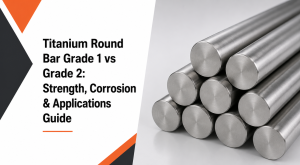
Titanium rods and bars are used in applications requiring high strength and light weight. Widely applied in aerospace and automotive fields, these are also applied in medical equipment. These rods are offered in different lengths and diameters and can be tailored to suit particular purposes, making them versatile for high-demanding industries.
4. Titanium Fasteners (Bolts, Screws, Nuts)
Titanium fasteners, including bolts, screws, and nuts, are vital in aerospace, automotive, and marine industries. They provide superior strength and corrosion resistance, with long-term reliability even in severe environments. Titanium fasteners are light but very strong, which is why they are critical to structural integrity in high-stress applications.
5. Titanium Wire
Titanium wire is used in aerospace, medical, and filtration industries. It’s appreciated due to its malleability, tensile strength and corrosion resistance. It finds applications in implants and orthodontic devices in medical usage. The wire is adjustable to different diameters to fit special requirements in both industrial and medical usage.
6. Titanium Foil
Titanium foil is very thin and finds application in areas of minimal weight and optimal strength. Found frequently in electronics and the aerospace industry, it is corrosion and heat-resistant. Medical devices and thin-film technology also make use of this thin foil, for its versatility in precision applications.
7. Titanium Alloys (Titanium Alloy)
Titanium alloys are produced by mixing titanium with other metals, which increases its strength and heat resistance. Alloys such as Ti-6Al-4V are employed in aerospace and medical industries. These alloys have better tensile strength and corrosion resistance, which makes them suitable for harsh environments.
8. Titanium Castings
Titanium castings are utilized in the fabrication of intricate shapes for the aerospace, defense, and medical industries. Casting enables one to achieve complicated designs without compromising on the material’s strength and corrosion resistance. These castings are best suited to fabricate high-performance components for industries demanding precision and durability.
9. Titanium Coatings
Titanium coatings are used to enhance the wear resistance and corrosion protection of other materials. Applied in aerospace, medical, and tooling applications, they have a hard protective coating. Titanium coatings are particularly useful in components that are subjected to high temperatures or aggressive chemicals, lengthening the life of the parts.
Different Types of Titanium Grades
Titanium comes in several grades, each offering different characteristics based on its alloying elements and processing. Some common grades include:
- Grade 1 (Pure Titanium): Pure titanium, with good formability and excellent corrosion resistance. It is applied in medical devices, chemical processing and marine environments.
- Grade 2: Slightly stronger than Grade 1, this titanium alloy is commonly used in industrial applications.
- Grade 5 (Ti-6Al-4V): One of the most widely used titanium alloys, it is stronger than pure titanium and is often used in aerospace and medical implants.
- Grade 9 (Ti-3Al-2.5V): This alloy offers a balance between strength, weight, and corrosion resistance, often used in high-performance racing vehicles and sporting goods.
Conclusion
Titanium is a remarkable metal with versatile titanium material properties that make it an essential material in sectors from aerospace to healthcare. Whether you need pure titanium or titanium alloy for your upcoming project, gaining insight into the uses and various types of titanium grades will enable you to select the appropriate material for the work. With its unique combination of strength, lightness, and resistance to corrosion, titanium continues to be an indispensable metal in many applications.
For individuals looking to buy titanium stock material, it’s important to reach out to trustworthy titanium material suppliers who can offer quality materials that are appropriate for certain requirements.