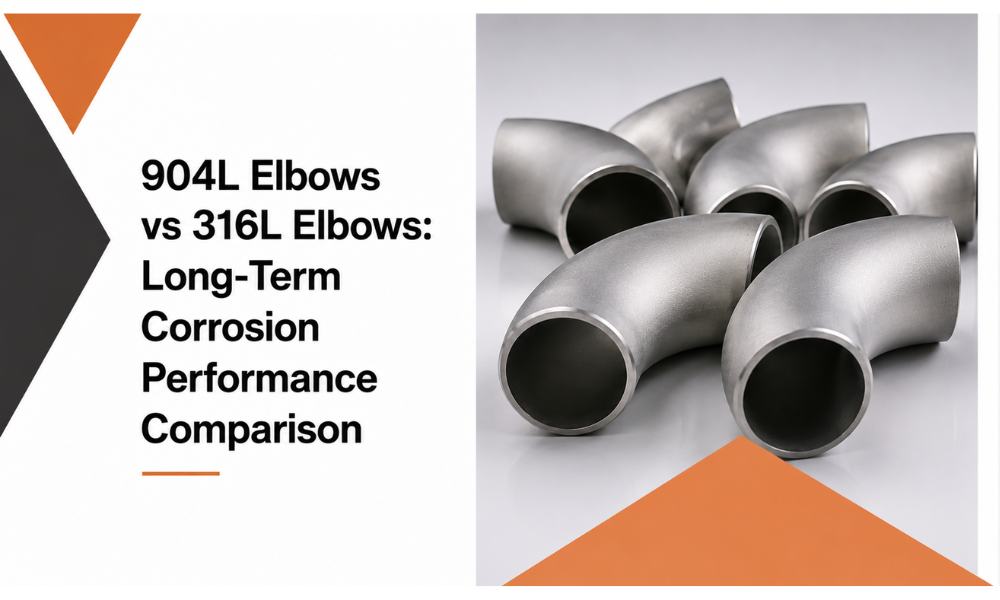
Stainless steel pipe elbows do more than redirect flow; they’re structural components holding a piping system together under pressure, temperature, and chemical exposure. When the media is corrosive, material selection becomes the most critical decision you’ll make. Two grades define high-performance elbow applications: 904L pipe elbows and 316L pipe elbows. Each has strengths. They’re not interchangeable.
Understanding Stainless Steel Pipe Elbows
Function and Importance in Piping Systems
Pipe elbows change flow direction typically at 45° or 90° angles without creating leak points or pressure drops. They’re load-bearing components that must survive the same chemical and mechanical forces as the straight pipe they connect. In corrosive service, elbows often show degradation first because flow direction changes create turbulence and localized stress on the pipe wall. Picking the right alloy here matters as much as picking the right pipe.
Role of Material Selection
Alloy chemistry determines how long the elbow lasts. The wrong grade corrodes faster, especially at welds and crevices where fluids stagnate. The right grade matched to specific media, temperature, and pressure delivers reliable, long-term performance. That’s why material selection is a critical step, not an afterthought.
Stainless Steel 316L Pipe Elbows
Chemical Composition
316L is the low-carbon version of Type 316 stainless steel. Its chromium-nickel base has been enhanced with molybdenum, resulting in better corrosion performance over normal 304-grade material. The low carbon content prevents carbide precipitation during welding and also protects the heat affected zone from post weld corrosion.
Corrosion Resistance
316L is well suited for mildly to moderately corrosive environments. Molybdenum gives better resistance to pitting and crevice corrosion than 304-grade alloys. It handles moderate chloride concentrations reasonably well. But in highly aggressive environments concentrated chlorides, sulfuric acid, or elevated service temperatures, 316L reaches its operational limits quickly.
Common Applications
316L stainless steel pipe elbows are widely specified in food processing facilities, pharmaceutical plants, general marine installations, water treatment systems, and standard chemical processing where corrosion conditions are moderate.
Stainless Steel 904L Pipe Elbows
Chemical Composition
Grade 904L is the most sophisticated variant of the highly alloyed austenitic stainless steel. It consists of a chromium-nickel matrix extensively strengthened with high quantities of molybdenum and copper which greatly boosts its resistance to severe corrosion such as heated chloride attack and sulfuric acid compared to conventional 316L grade material. The ultra-low carbon level precludes precipitation of chromium carbides during welding, hence the heat affected zone stays totally protected against intergranular post-weld corrosion.
Superior Corrosion Resistance
904L outperforms 316L across nearly every aggressive medium. Its higher PREN (Pitting Resistance Equivalent Number) translates to measurably better protection against pitting and crevice corrosion in chloride-rich conditions. It handles concentrated sulfuric acid, phosphoric acid, and elevated-temperature seawater service where 316L degrades within months. The elevated nickel content also provides meaningful protection against stress corrosion cracking.
Ideal Applications
904L pipe elbows serve sulfuric acid production plants, petrochemical facilities, offshore oil and gas systems, pulp and paper plants, and harsh marine environments. Wherever 316L has proven insufficient, 904L is the justified upgrade.
Direct Comparison: 904L vs 316L for Pipe Elbows
The following comprehensive table outlines the critical engineering and financial differences between these two piping grades:
| Evaluation Factor | Stainless Steel 904L Pipe Elbows | Stainless Steel 316L Pipe Elbows |
| Corrosion Resistance | Superior protection with a higher PREN value; highly resistant to sulfuric and phosphoric acids. | Suitable for mild to moderate environments; vulnerable to heavy acidic or high-chloride media. |
| Mechanical Properties | Excellent tensile strength; marginally lower hardness makes it slightly susceptible to surface dents. | Robust tensile strength and standard pressure capacities with slightly higher surface hardness. |
| Cost-Benefit Ratio | Higher upfront material cost, but delivers lower lifecycle costs by preventing unplanned downtime. | Lower initial investment, but prone to frequent, expensive replacements in severe service. |
| Weldability & Joining | Fully weldable but demands strict heat input control and specialized filler metal to avoid sensitization. | Highly weldable using standard procedures with excellent joint stability and broader tolerances. |
316L is an affordable and durable solution for light manufacturing conditions, but 904L is a vital upgrade for severe, acid-heavy duty. It’s excellent alloy chemistry readily reduces the failures from localized corrosion and so, the greater initial cost is justified by minimizing the downtime of the structure and maximizing the operational life of the whole pipeline.
Choosing the Right Elbow for Your System
Begin by processing the medium and identifying the acids, chlorides or compounds your system may encounter. Check operational temperature and pressure. Consider the projected service life, access for maintenance and the industry norms that apply. Budget is important, but can’t be the primary contribution. 316L is feasible and cost-effective under mild conditions. If system uptime and corrosion performance is the priority for harsh conditions, then 904L is the ideal investment.
Conclusion: Optimizing System Performance with the Right Stainless Steel Elbow
Selecting between 904L and 316L corrosion-resistant pipe elbows comes down to one question: how aggressive is your service environment? 316L handles moderate conditions reliably. 904L handles the demanding ones. We recommend working with qualified material specialists and established stainless steel pipe elbow suppliers Renox Impex works with a range of industry applications to match the right alloy to your system’s pressure class, media, and service life expectations. Get the specification right from the start and avoid costly replacements later.