Introduction
Material selection in EPC projects has a direct effect on cost, installation time, structural performance, and maintenance over the project’s lifetime. A wrong decision at the procurement stage creates problems that are expensive to fix later.
Most large-scale projects run into the same set of practical challenges. Weight on structures, corrosion in outdoor or chemical environments, fabrication speed, and consistent supply over long project durations. These issues come up repeatedly, and material choice is often where they get solved or made worse.
Aluminium round bars address most of these concerns in a practical way. Knowing the core properties and where they apply helps procurement teams and engineers decide whether this material fits their project requirements.
What Are Aluminium Round Bars?
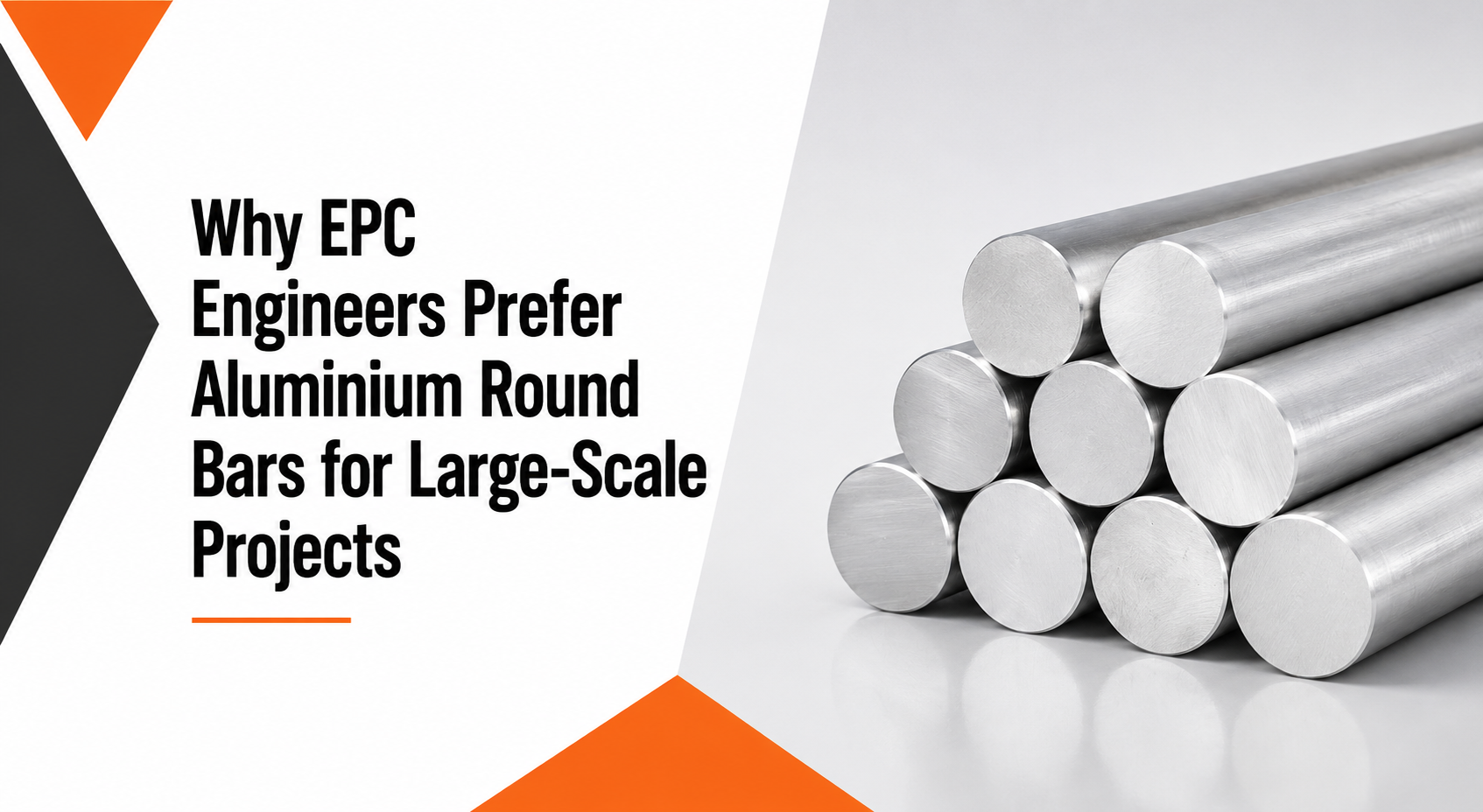
These are solid cylindrical bars made from aluminium alloys. Simple in form, but used across a wide range of structural and industrial applications.
The two most common grades in EPC work are 6061 and 6082. Grade 6061 is more widely used. It has a reasonable strength level, welds without major issues, and resists corrosion in most environments. Grade 6082 is a step up in strength and is more appropriate where load-bearing demands are higher.
Both grades are lightweight, corrosion-resistant, and offer a useful strength-to-weight ratio. That combination matters when you’re trying to reduce structural load, cut transport costs, or make on-site handling more manageable.
Key Properties That Matter in EPC Conditions
Weight
Aluminium is roughly one-third the weight of steel. On large sites, that difference reduces crane use and makes manual handling faster. On weight-sensitive structures, this is a significant factor.
Corrosion resistance
Aluminium forms a natural oxide layer that protects it from rust without any applied coating. In most environments, that means lower long-term maintenance cost. It does not need painting schedules or re-coating.
Electrical and thermal conductivity
It conducts electricity and heat reasonably well. Not as well as copper, but well enough for many power and electrical applications, and at a much lower weight.
Machinability
It drills and machines cleanly. Fabrication shops can process it faster than harder metals, which reduces production lead times. No special tooling is usually required.
Recyclability
Scrap from fabrication is fully recyclable without quality loss. On large projects, that recoverable value offsets some material cost. Also relevant for projects with sustainability obligations.
Where Aluminium Round Bars Are Used in EPC Projects
Construction and Infrastructure
Used in framing systems, load-bearing supports, handrail systems, mezzanine frames, and facade supports. Performs in outdoor conditions without surface treatment in most cases. Common on large commercial builds and infrastructure projects where managing structural weight is a priority.
Power and Electrical
Used in busbars, connectors, and conductive hardware. Weight is lower than copper, whilst conductivity is still adequate for many electrical installations. Substations and transmission infrastructure use aluminium round bars where both these properties are required.
Oil and Gas
Offshore platforms and onshore facilities use these bars for brackets, supports, and non-critical structural elements. In environments with moisture, chemicals, or harsh conditions, aluminium holds up without the maintenance demands of mild steel.
Marine and Offshore
Aluminium does not degrade quickly in saltwater environments. Used in offshore structures, coastal builds, and marine fittings. Where maintenance access is limited or expensive, the low upkeep requirement matters over the structure’s service life.
Benefits of Using Aluminium Round Bars
Lower weight reduces transport and handling costs. Fabrication is straightforward. Special tooling and faster processing is not required. Once installed, maintenance is minimal under normal conditions.
Lifecycle cost often works out lower than mild steel even if upfront material cost is slightly higher. Corrosion resistance, long service life, and recyclable scrap all contribute to that. On larger projects these factors add up.
Comparison With Steel and Stainless Steel
Steel is stronger. For applications where load capacity is the main requirement and weight is not a concern, steel is the more logical choice.
Stainless steel has similar corrosion resistance to aluminium but costs more and takes longer to machine. In most environments, aluminium delivers comparable protection at a lower cost and faster fabrication speed.
Aluminium makes more sense when the priorities are weight, corrosion exposure, and fabrication turnaround. It is not the right choice for every application, but for the ones where those factors matter, it is often the more practical option.
Choosing the Right Grade and Size
Grade 6061 is sufficient for most general structural work. Grade 6082 is more appropriate for higher load requirements.
Diameter and size should be based on load calculations. Oversizing wastes material and cost. Undersizing is a structural risk. Coastal or chemical environments may need specific alloy grades that perform better under those conditions. Load analysis and site conditions should drive these decisions, not general preference.
Choosing a Supplier for Large-Scale Projects
Supplier reliability matters as much as material quality on EPC projects. A reliable aluminium round bar supplier provides mill certificates and material test reports without needing repeated follow-ups. Stock availability across multiple grades and sizes is important. Projects change across phases, and single-source supply simplifies logistics considerably.
Batch consistency is something that gets overlooked. Inconsistent material properties across deliveries cause problems in fabrication. Pricing should be transparent and stable. Fluctuating quotes on large volumes create budget management problems. Delivery reliability is critical on EPC timelines, and suppliers with large-project experience understand this better than general distributors. Check their track record before committing.
Conclusion
Aluminium round bars are used in construction, power, oil and gas, and marine EPC work as they are lightweight, durable, low-maintenance, and straightforward to fabricate. They do not suit every application, but for projects where weight, corrosion resistance, and fabrication speed are key factors, they are a practical and cost-effective choice. Selecting the right grade, size, and supplier for your specific project conditions determines whether they deliver the expected benefit.